(ENGLISH) Ambassador Raul Toomas: There is no longer room for grey zones in Europe
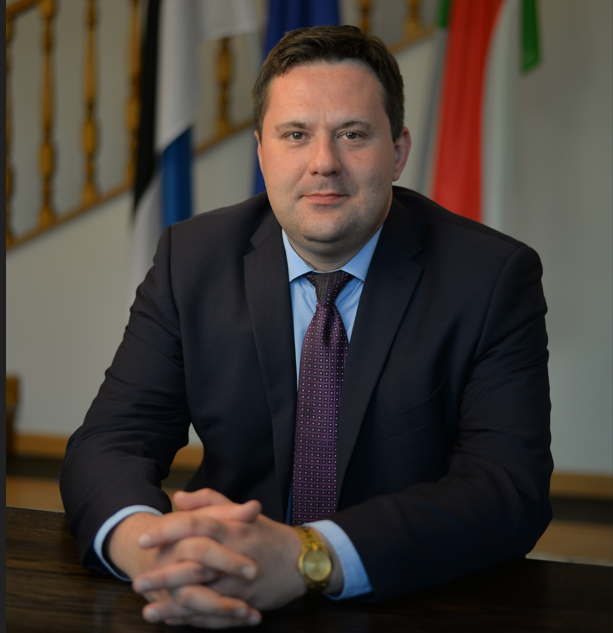
foto: Embassy of Estonia in Serbia
What is the first thing that comes to your mind when you hear “The Republic of Estonia”? Be honest — even if your association is related to qualifying for a major sports competition, whether in football or basketball. Precisely for that reason, it is the right time for us to get to know the Republic of Estonia, to understand how its representatives think when they hear “The Republic of Serbia”, to learn and see where the two countries cooperate, in which areas their views align, where they differ, and is there a room for improving bilateral relations.
The best way to do that is through conversation, and the best interlocutor — the Ambassador of Estonia to the Republic of Serbia, His Excellency Mr. Raul Toomas. Knowing that the Ambassador is on an official visit to Serbia (he represents Estonia non-residentially in Serbia, with his seat in Budapest), our editorial team wasted no time, arranged an introductory meeting, and through its questions initiated an interesting and meaningful discussion.
Let’s Talk About Negotiation: Thank you for taking the time for “Let’s Talk About Negotiation” media portal. As agreed, we’ll discuss relations between Serbia and Estonia, though this time not in the context of sports, as they are most often portrayed — a fact that makes this interview even more significant. It has been nearly 25 years since Serbia and Estonia established bilateral relations. How would you describe the development of relations between the two countries, both of which were shaping their international positions after the dissolution of their respective federations?
Raul Toomas: Thank you for your interest in Estonia's positions and viewpoints. I appreciate your kind request for an interview. Bilateral relations between Estonia and Serbia are positive, though still relatively modest. We see significant potential to strengthen our cooperation, particularly in the fields of technology, IT, and digital affairs. Estonia has already contributed to several projects in the Western Balkans, focusing on digital governance and cybersecurity. The Estonian e-Governance Academy (eGA) has played an active role in enhancing cyber-resilience across the region, including in Serbia.
It appears that some post-Soviet countries, despite seemingly starting from a more difficult position than many post-Yugoslav states, managed to complete their transition process more quickly and successfully became members of the European Union. What made the difference?
Raul Toomas: Reuniting with Europe was an existential question and a vital step in reclaiming Estonian culture and identity, which the Soviet occupation had sought to repress and destroy. EU accession became a common goal shared by all political parties and society in general. Differences and personal interests were set aside in pursuit of a better future for generations to come.
Estonia has had a long and storied history with Russia. With the Russian aggression in Ukraine, the long border that Estonia and Russia share is perceived as a major security threat. How does this context influence Estonia’s view on Serbian foreign policy and traditional ‘balancing act’ between the EU and Russia? Does Estonia view Serbia’s low alignment with the CFSP as especially significant, even when compared to other issues?
Raul Toomas: Russia's actions have consistently sought to undermine Estonia's sovereignty and security, demonstrating a strategic intent to destabilize our nation independence and territorial integrity. The aggressive posture of the Russian government toward Estonia reflects a broader pattern of behavior in its dealings with neighboring countries, especially those in the Baltic region and Eastern Europe. Estonia’s commitment to NATO and EU as well its full support for Ukraine have made us a target of Russian aggressive behavior. For Estonia, this means continued vigilance, as the threat from Russia remains persistent and unpredictable.
Serbia’s limited alignment with the EU’s Common Foreign and Security Policy (CFSP), particularly regarding sanctions against Russia, raises concerns as it highlights the country’s current strategic orientation. In our view, if EU membership is truly Serbia’s declared objective, its authorities should assume greater responsibility and provide a clear demonstration of this commitment through consistent action.
The Government of Serbia often promotes the narrative that if Serbia were to recognize Kosovo and impose sanctions against Russia, it would be able to join the European Union very quickly. How does this claim sound to you — does it have any basis? And how does Estonia view Serbia’s EU reform process?
Raul Toomas: The Belgrade-Pristina dialogue is an integral part of Serbia’s EU accession process and directly influences its progress, as outlined in Serbia’s negotiating framework. Equally important is Serbia’s level of alignment with the EU’s Common Foreign and Security Policy (CFSP), particularly since the start of Russia’s full-scale aggression against Ukraine. There is no longer room for grey zones in Europe.
However, these elements represent only part of the broader “homework” for Serbia. Progress is required across the entire EU acquis. The fundamentals, especially the rule of law, are the most critical, as they set the overall pace of accession for all candidate countries. Serbia’s general level of preparedness is respectable and country has capable public administration. Yet in recent years progress has slowed. In some areas, the European Commission has even reported backsliding, notably in freedom of the media. Therefore, Serbia is expected to intensify its efforts and deliver tangible results across all areas of the accession process.
Although you represent Estonia in Serbia on a non-residential basis, with your seat in Budapest, you have been Ambassador for more than two years. Over the past year, Serbia has been very much in the focus of European media and MP of EU Parliament — and if it were not for the war in Ukraine, it would likely be the number one topic in many media outlets because of developments in a country that is a candidate for EU membership. From your perspective as the ambassador of an EU member state to Serbia, how do you see Serbia and Serbian society over the past year? Is there anything that concerns you?
Raul Toomas: As I am not present in the country and have been following the developments from a distance, it is quite challenging to draw in-depth conclusions. Politically, Serbia remains in a delicate position. Public discourse has become more polarized, with differing opinions on national identity, foreign policy, and the direction the country should take. Culturally, Serbia is a country with rich traditions and a deep sense of history. One notable shift has been in the area of technology and digital transformation. The younger population is more open to global ideas, trends, and lifestyles. The increased use of social media, e-commerce, and digital tools has made its mark, especially among younger generations, creating new opportunities.
Based on Estonia’s experience as one of the world’s most advanced digital societies, what key lessons or transferable practices in developing digital public services and e-governance could be most valuable for Serbia as it prioritizes good governance reforms, especially considering the current gaps and the significant work that still lies ahead?
Raul Toomas: E‑solutions can significantly enhance transparency and efficiency, and digital public services were central to Estonia’s transformation. Yet public trust in institutions is the decisive factor for any e‑solution to succeed. You can build sophisticated applications, but without trust they won’t be used, or they risk being misused. That is why progress on fundamentals, especially the rule of law, remains essential. The right approach is to start step by step, pairing technical improvements with credible institutional reforms.
Digital transformation is a cornerstone of Estonia’s development cooperation. Drawing on its extensive expertise, Estonia offers valuable knowledge on advancing digital solutions and expanding e‑governance opportunities. Equally important is the integration of green and digital transitions, ensuring that innovation supports sustainability. Our priority is to promote solutions that meet community needs while building a strong foundation for long‑term development.
What about Estonian civil society sector? It seems that Estonia is known for its strong civil society sector. What role did Estonia’s civil society play in the country’s process of accession to the European Union? What advice do you have for the civil society of Serbia, which is often demonized by the media and government, and which enjoys low levels of trust and support from the public?
Raul Toomas: A vocal and vibrant civil society is a cornerstone of any healthy democracy. In Estonia, civil society organizations are actively engaged in governance and consultation processes, ensuring that the diverse interests of society are both represented and protected. It is equally important for the government of Serbia to collaborate with and listen to civil society organizations. Such cooperation not only strengthens democratic practices but also fosters trust within society. It is crucial that Serbian citizens not only witness but also actively participate in the transformative processes shaping their society. Such an approach ensures that societal changes are not merely top-down directives, but collective endeavors that reflect the needs of the people, ultimately strengthening social cohesion and national identity.
Where do you see space for further development and improvement in Serbian Estonian relations and how might ongoing Serbia’s international balancing affect the relationship between the two countries?
Raul Toomas: Serbia and Estonia have several avenues to improve their bilateral relations, particularly in digital innovation, academic and cultural fields. Estonia could also support Serbia’s alignment with EU standards, given Estonia's own experience. Estonia could offer technical and political advice, particularly on governance and digitalization.
Interview conducted by Milan Hiber and Branislav Cvetković